

Disclaimer: After the writing of this article a panel of judges blocked Texas’ Congressional map. This decisions has been overturned temporarily by the Supreme Court, but the final result is still unclear. All information was accurate as of November 16, 2025.
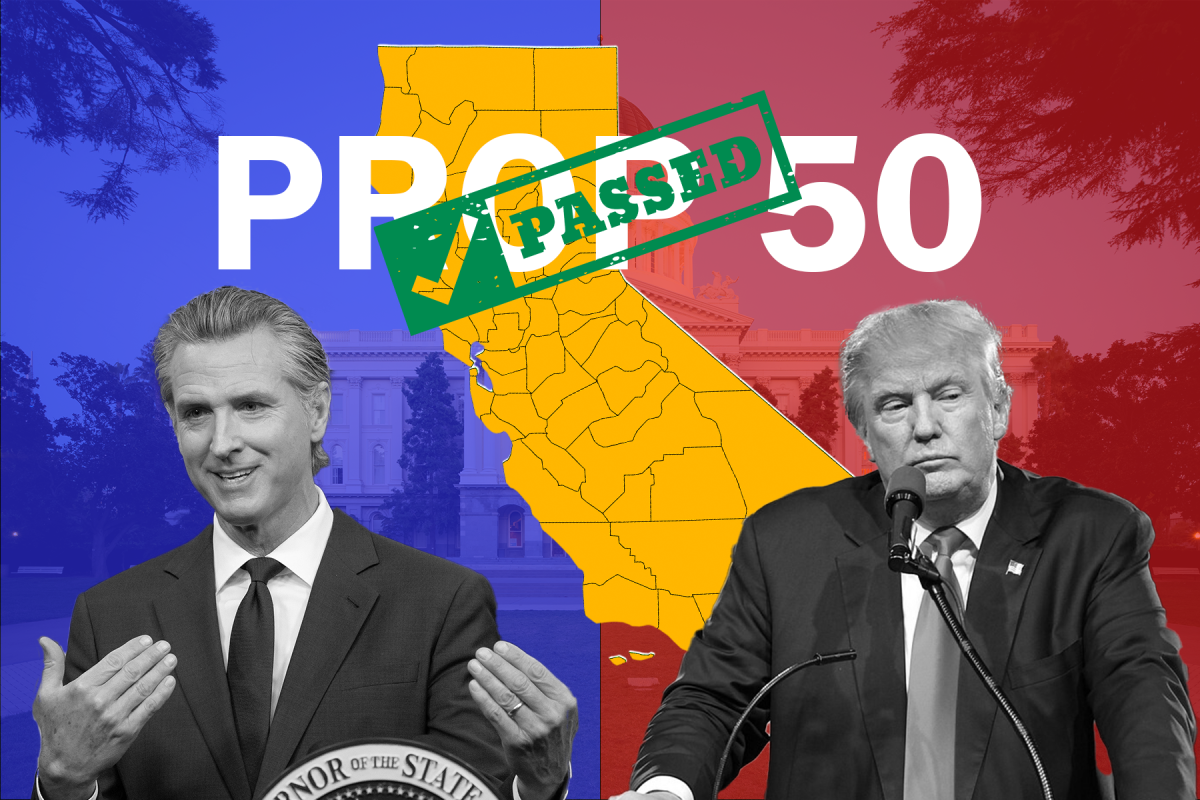
On November 4th, 2025, California voters had only one thing on the ballot: Proposition 50. It was created by California Governor Gavin Newsom as a way to counter President Donald Trump’s push to have several Republican-controlled states redistrict, in order to increase the chances of the Republicans winning seats in the House of Representatives. It passed by a majority of over 64%, but what happens now?
Redistricting is normally done after a census in order to reorganize congressional districts. This decides who gets to vote for which seat in the House of Representatives. For example, Millbrae is in California’s 15th congressional district which is represented by Democrat, Kevin Mullin. What Trump and California are trying to do is called gerrymandering, or redistricting in order to get an electoral advantage. They can do this in two ways. They either pack (put their voters in one district) or crack (split opposition voters over several districts so they don’t gain a majority).
Gerrymandering is a deeply complex and controversial issue, and is done by both political parties to some degree. Though it can be legally dubious, one of Mills’ government teachers, Alejandro Lira, said, “States can pretty much do where they want to an extent. I mean, unless the Supreme Court has weighed in, you can’t do it.”
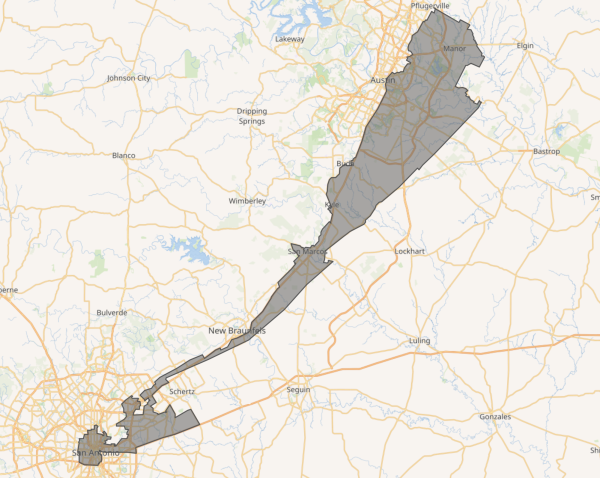
Before the passage of Proposition 50, California used an independent redistricting committee. This produced the expected results (43 Democrats and 9 Republicans) for what is a very democratic state. This changed after the election of Donald Trump. Trump has never been scared to order around public officials, and in July he ordered Greg Abbot, the Republican governor of Texas, to redistrict because according to him, “We [Republicans] are entitled to five more seats.” Texas is already a gerrymandered hellscape with districts like Texas’ 35th District which somehow spreads between Austin and San Antonio, and only exists due to the Supreme Court’s conservative majority. This was followed by Missouri and North Carolina also trying to lean more seats their way. This blatant attempt to “rig” the 2026 midterm election in my mind justifies Prop 50 and its controversial redistricting plan.
Personally, I don’t care much for gerrymandering as it hurts democracy and people’s ability to choose the leader they want. But, if other states are willing to gerrymander so blatantly, you can’t just take it lying down.
Many voters likely share a similar view to Advanced Placement Government student Thomas Phelan (12), who shared, “I would say I’m against gerrymandering, but I would say in this case, I think that it was a good use because it supports me.”
If California had just done this, with no prompting, I would likely not support the measure, but as the old adage goes, “desperate times call for desperate measures.” Is this measure fair to California Republicans? No. But is Texas’ new congressional map fair to Texas Democrats? Also no. Obviously, democracy isn’t supposed to function this way, but the reason why we have different parties is to have them balance each other out, and in this case it required Democrats to get their hands dirty.
All this gerrymandering isn’t over, as several states have also decided to redraw their maps. In Ohio, a Republican controlled state was able to draw a slightly more Republican-favoring map. In Utah, their current map is under review by the courts for being overly gerrymandered for Republicans, and Virginia is trying to pull a similar move to California — only for them, it’s with a state constitutional amendment. It has become a redistricting arms race ahead of the 2026 midterm elections with Democrats desperately hoping to carry their momentum from their clean sweep of the 2025 election and create some opposition to President Trump, who has thus far gone mostly unimpeded by Congress or the Supreme Court despite pushing the extent his executive powers. There is a challenge, though, as recently the Department of Justice has filed suit against California for gerrymandering based on race; unlike gerrymandering for partisan advantage, this isn’t legal. Only time will tell if the DOJ’s case holds water, so what the future holds is still up in the air. With all this said, it only matters, as Lira puts it “if people go to the polls and those five districts actually become Democrat.” So, whether you be a Democrat or Republican, or something else, go out and vote. Show what makes America truly great: democracy.