
Most high schoolers get their driver’s license before they graduate. Nicole Li (11) isn’t like most high schoolers. Instead of one license, she’ll have two. And ironically, a driver’s license won’t even be her first one.

This past fall semester, a family friend introduced Li to flying by taking her on a check flight, allowing her to sit back, relax, and take in the full experience. The feeling of flying immediately clicked with her, sparking her interest in exploring aviation. She recounts, “[My] flight instructor won’t let me live down how much I was smiling.”
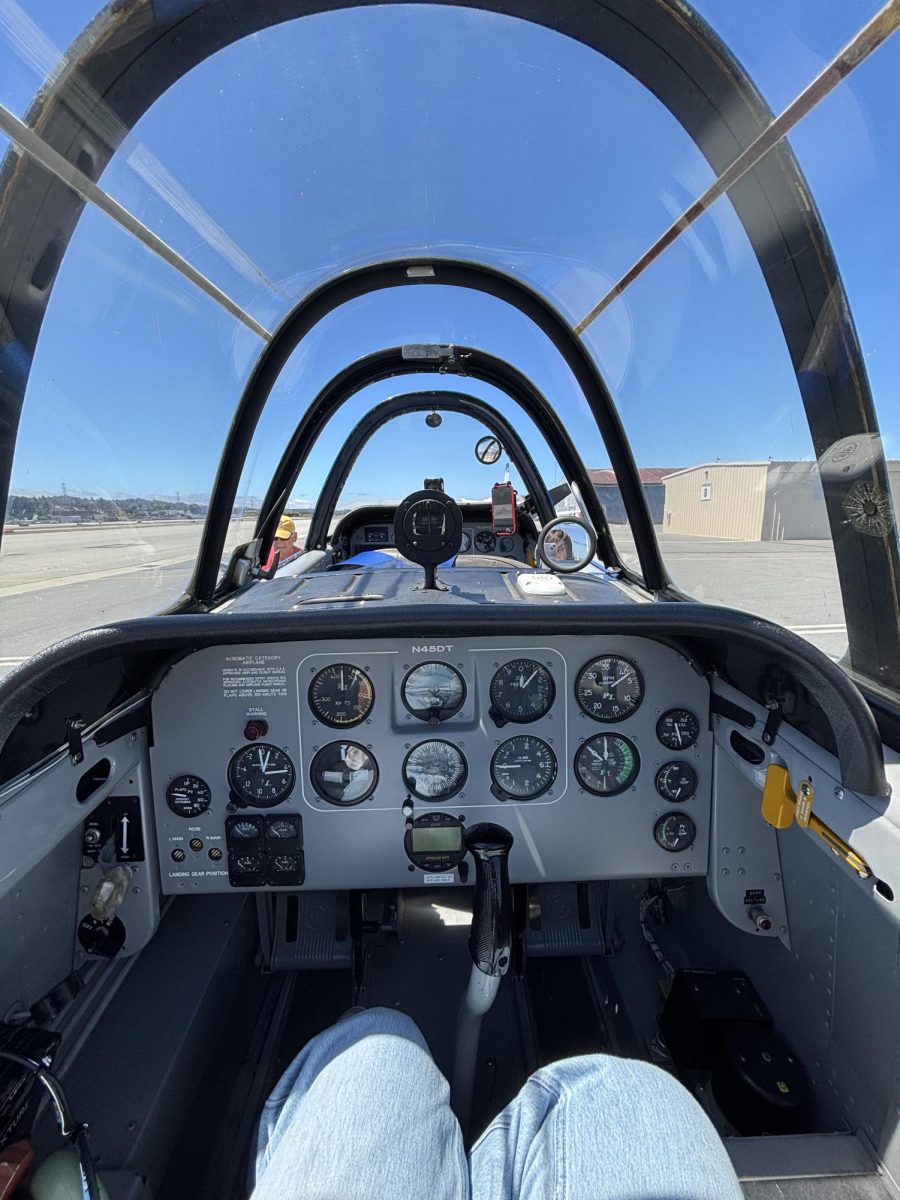
But learning to fly is more than just a breathtaking experience. After that first flight, she began to train as part of a cohort at the San Carlos airport, where she spends five hours each weekend learning with her instructor. To earn her license, Li must pass an exam while also logging at least 40 flight hours, split evenly between day and night.
Early in her training, Li took to the controls. While her lessons covered foundational knowledge like aeronautics and pre-flight checks, much of her learning happened midair. Following her first takeoff, her instructor wasted no time in testing her. She remembers, “I was literally in the air and he was like, ‘Yeah, do a turn’ … So you tip down and you can see the ground. I thought it was pretty nerve-wracking.”
Even through unexpected twists, Li maintains confidence in her abilities. “I know I physically can’t fall. It’s improbable. I could sink down a little this way, but by then I would have been able to react to get myself back up again.” In some ways, Li even expressed feeling more at ease when flying, describing, “It’s different from driving. Driving, you have a lot of cars and things right next to you that you need to keep track of on the road. When you’re in the air, you have some leisure time to glance down at your board.”
Currently, Li continues to learn fundamental procedures and maneuvers such as climbing, decelerating, and completing S-turns. The more time she invests in flying, the deeper her commitment to the field becomes. “The more I hung out with the community, and the more I was talking with them, I was like, ‘I think I like this, I enjoy this.’ Definitely, this is a viable choice for a career and I’m passionate in pursuing it.”
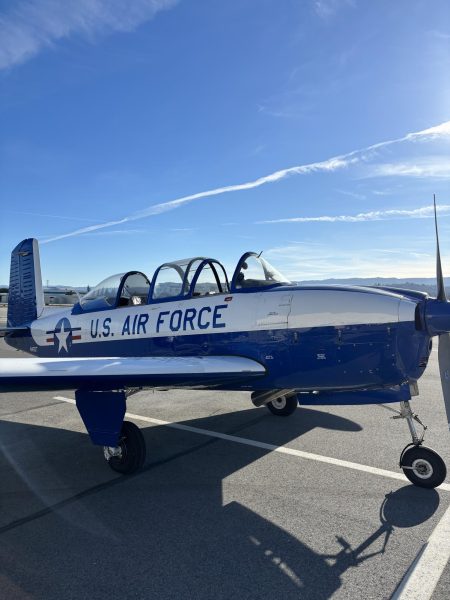
Li recognizes that it’s rare to see minorities as pilots, but that she’s actively trying to dispel this narrative through her training. She explained that many pilots today trace their career experience back to the military; specifically, the Vietnam War left behind an influx of young male pilots that shaped industry demographics for decades. Those statistics are beginning to shift, and Li cited that within her cohort alone there are other minorities who are aspiring pilots.
Among cultural barriers, there is also a high monetary and educational threshold that must be met to obtain a pilot’s license. “Some people just don’t know where to start, and that’s why a lot of people don’t really branch out to it,” Li reflected.
Flying classes can cost anywhere in the tens of thousands of dollars, not to mention material fees like paying for fuel, medical checks, plane maintenance, and CFI certificates — factors that can pose significant barriers for youth looking to enter the field. Fortunately for Li, she was given the opportunity to offset those costs through providing plane maintenance for her instructor.
In the future, Li looks forward to joining a nine-week program where she’ll learn the physics behind flight, and after graduation, she plans to further pursue aviation in college. Afterwards, it’s all about networking and securing a position within a commercial airline, where she’ll hopefully stay for decades climbing the ranks until she becomes a captain.
For Li, flying isn’t just about earning a license, but changing who gets to be in the cockpit. “[Piloting] is not going to be dominated [by white men] anymore. We’re gonna diversify. Promise.”