
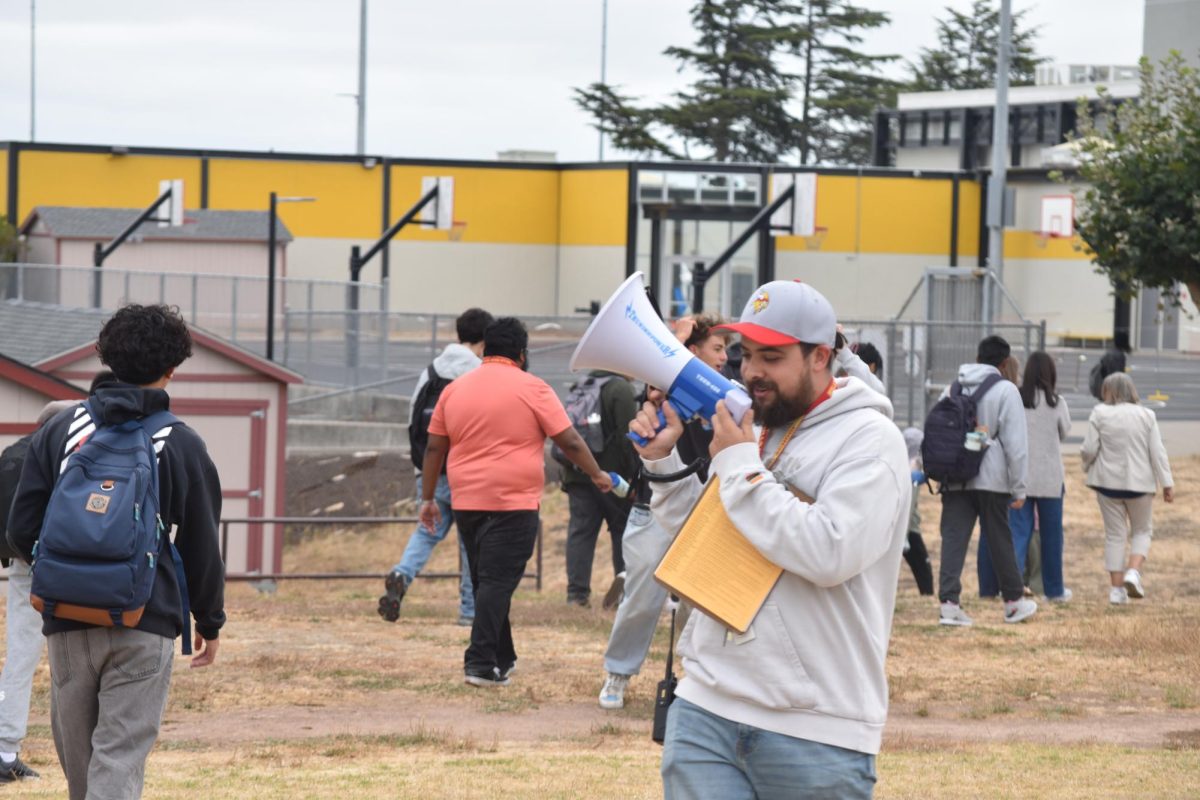
On Aug. 14 at 10:08 a.m., the second day of the 2025-2026 school year, the first of many fire alarms to come, went off. All Mills students and staff followed the standard fire evacuation protocol and filed out to the designated baseball field, awaiting the announcement to go back to class.
In December 2020, the San Mateo Union High School District (SMUHSD) Board passed a district-wide decision to replace the outdated fire systems. Mills executed this plan four years later, and updated the school’s fire systems in the 2024-2025 school year. The fire systems at Mills consist of heat sensors and smoke sensors. When these sensors detect heat or smoke, they trigger an automated voice system, flashing lights, and sends an automatic message to the fire department. Each time the fire department is notified because of a false alarm, there is a fine for their services to come check and to provide emergency aid.
The first evacuation, which happened during second period, was the result of an equipment malfunction. When a student accidentally bumped into a red post-indicator-valve (PIV) post, which is a visual indicator to show if a control valve is open or shut and allows access to the water supply for fire protection, they set off the fire alarm system.
During many of the evacuations, the bell schedule has been revised with shortened periods to give students enough time for break. Karen Yang (10) speaks about the impact that the revised schedules due to fire evacuations has on her.
“It takes away a lot of time from learning, especially during class, and then that time has to be moved to after school, or at night to study, just go over the concepts that you learned,” Yang says.
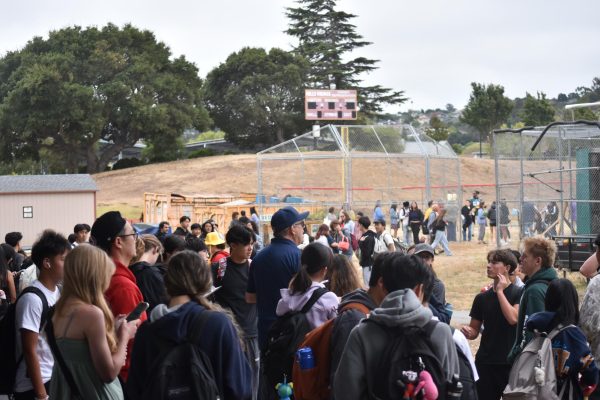
The third evacuation occurred on Sep. 5 at 10:57 a.m. during FLEX period, which affected some students’ time management. Yang expressed her opinions on how this evacuation impacted her studying for her physics test and altered her day’s schedule.
“I lost a lot of time during FLEX to study,” Yang responded. “And I was a little bit frustrated because I do a lot of extracurriculars after school, so normally I have really little time to study, so I had to move my time and study at night instead of during FLEX.”
The second and fourth evacuations of this school year, which happened on Aug. 15 at 12:10 p.m. during fourth period and after school on Sept. 10 at 2:55 p.m., were both confirmed by Assistant Principal James Ortega to be caused by students vaping in the bathrooms.
The Mills administration addresses the consequences for students who are responsible for causing school-wide fire evacuations. AP Ortega explained the possible repercussions for student-caused fire alarms.
“Students that are causing it due to something else that they’re doing, like vaping or smoking or something like that,” Ortega said. “Well, there’s consequences in the sense that we call home. We follow the discipline matrix for the district appropriately if they cause loss of instructional time.” Ortega continued, stating additional consequences, which include suspensions, IRCs (intervention resource classrooms), and etc., “We recommend them to support programs like nicotine addiction or substance dependence, to just try to support anything that they’re having trouble with, because ultimately, we’re trying to support the student as a whole, and not just trying to get them into trouble.”
AP Ortega further elaborates on what the school is doing to respond to and prevent further class interruptions due to fire evacuations.
“We’re addressing it with the students,” Ortega replied. “We’re addressing it with the families of the students that have caused the incidents. And we are just trying to make sure that our campus security team is also aware of what has happened, so then they can make sure to stay in areas where that might happen more frequently, so that it doesn’t happen again.” The administrative staff also has access to security cameras on campus. Ortega added, “I have some of the cameras running on my computer all the time, to keep an eye out, just so this doesn’t happen again.”
With the fire alarms going off very often, AP Ortega stated the significance of treating all fire alarms with the same attitude.
“If something is frequently happening, you don’t take it as seriously as you should,” Ortega emphasized. “But you know, definitely it’s important for us to take everything seriously, like, if we ever have an evacuation, like, we should treat it as if it’s, like, seriously happening.”