
Students excitedly hover over a bucket of water as two wires are submerged and clipped onto a battery. Using a multimeter, they analyze and map rings of electric potential to reveal the voltage of the battery. In another experiment, coffee filters of increasing mass are dropped in front of a sensor to analyze the effect of drag on terminal velocity. For AP Physics C students, this is just another day of class. However, the discontinuation of AP Physics C for the 2026-27 school year will take away these hands-on learning experiences, resulting from an unusual decline in sign-ups among Mills students.
According to the Mills Course Guide, AP Physics C is “a calculus-based university level physics course” that covers mechanics, electricity and magnetism. Course prerequisites include having completed AP Physics 1 or Physics in the Universe, as well as having completed or concurrently enrolling in a calculus class.
Assistant Principal Jonathan White shared that the decision to cut AP Physics C was due to only having 11 students sign up, which was less than the regular 15-25 sign-ups needed to make continuing the class equitable. Meanwhile, interest in AP Physics C has stayed consistent at other schools in the San Mateo Union High School District (SMUHSD). According to Aragon High School AP Physics C teacher Steve Ratto, the course organically receives 35-55 sign-ups a year. Next fall, Burlingame High School will pilot AP Physics C: Mechanics.
It’s unclear why sign-ups have been particularly impacted. Among students currently enrolled in AP Physics 1, reasons including perceived difficulty of the course and the calculus prerequisite were commonly cited as deterrents from enrollment.
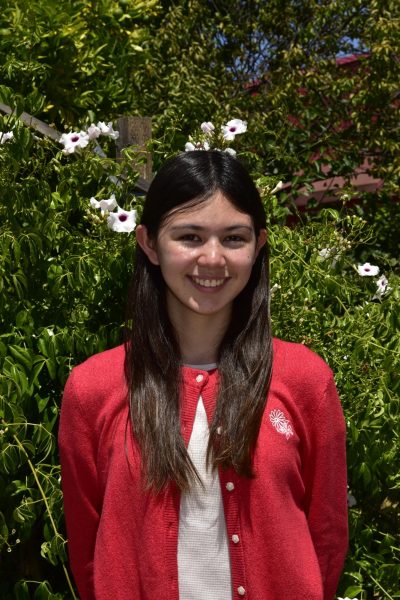
Current AP Physics 1 student Makeleta Vaka (11) said, “I think the rigor of this class made it clear to me that I would not be able to thrive, [and] I just don’t think it’s a class that I would want to handle my senior year.”
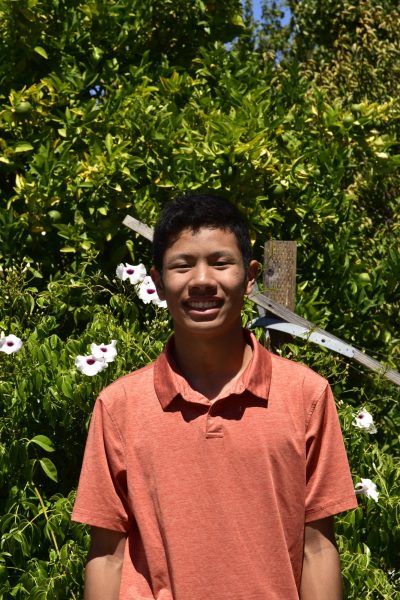
On a similar note, Yo Omura (11) said, “I thought it [AP Physics 1] was really difficult, which is kind of also why I’m not taking AP Physics C next year … If I couldn’t really keep up that well in AP Physics 1 … I didn’t think I would be able to [in AP Physics C].”
For underclassmen in AP Physics 1, the calculus prerequisite was a conflict with advancing to AP Physics C.
Christina Chen (10) said, “I found AP Physics 1 a lot more challenging than I initially foresaw, and I thought AP Physics C would be way too hard since I haven’t learned calculus.”
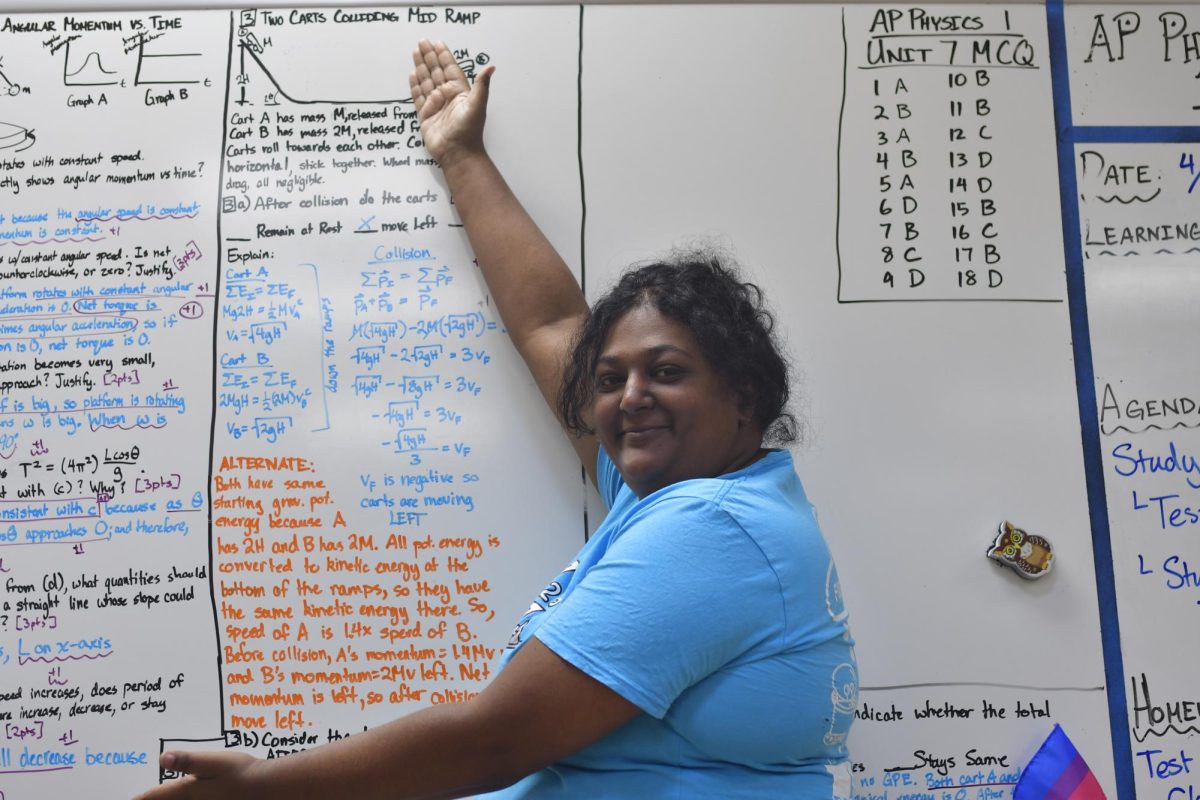
AP Physics C teacher Anjali Abraham introduced the class to Mills four years ago and has since been the sole instructor. She recognizes that the nebulosity of physics both as a class and a subject can discourage people from signing up, and that the course is designed to be demanding.
“I do try and make the class a little bit more difficult than the AP test so that kids feel prepared for their AP test when they take it,” Abraham said. “That’s what they’re actually paying money for, and that’s what can influence how much money they spend in college. Right now, you get a free class, and I want that to count for something.”
While this may just be a minor schedule shift for the 11 students who signed up for the class, AP Physics C is not an isolated case study. Enrollment is declining across AP Physics 1 and Physics in the Universe as well, resulting in a reduction from seven to five sections in the 2026-27 school year. In a broader sense, the removal of AP Physics C is just the final culmination of a dysfunctional physics pipeline.
In California, one life science (biology) and one physical science (chemistry or physics) are required by the state to graduate. After taking the required Biology Living Earth Systems class in their freshman year, Mills students default to taking chemistry as sophomores. In the past, students at Mills were required to sign a waiver declaring their intent to not take physics, but this was removed six years ago. With a class pathway that’s been normalized for over a decade and no major push to take physics classes, physics remains a low priority for many students.
“None of us want to take away any kid’s choice to say, ‘I would prefer to take a different class over this one,’ but also at the same time, there’s a lot of valuable information … and a lot of skills that you practice in physics class that you don’t get in other classes,” Abraham said.
Abraham explained that beyond strictly physics concepts, the introductory physics course, Physics in the Universe, includes Earth systems knowledge required by the state of California not covered in biology or chemistry. Especially for students pursuing STEM careers, not taking physics could limit opportunities to apply higher level math to the physical world and to build analytical thinking skills.
While this STEM pathway is typical of most high schools, there are a select few who recognize the importance of physics as a foundational science and deviate. Capuchino High School is part of a nationwide “physics first” movement and is the only comprehensive school within SMUHSD to do so. In their system, all students take Physics in the Universe as freshmen, then advance to chemistry during sophomore year and finally biology in their junior year.
“The ‘physics first’ model has allowed students to engage with relevant, familiar physical phenomena, while at the same time practicing their problem solving, critical thinking and math skills,” Melanie Dachauer, a physics teacher at Capuchino, explained. “This helps set them up for success in their subsequent science classes, where they engage with more rigorous coursework including designing their own lab investigations.”
Abraham corroborated Dachauer’s observations. “[Taking physics first has] shown to get more people involved in STEM and get more people to stay interested in STEM … And it’s also proven to have more people complete the three years of science that’s recommended by the UCs,” Abraham said. “It’s also just the better way to teach science because chemistry branches off of physics and biology branches off of chemistry.”
Capuchino’s model is just an example of what prioritizing physics could look like. For now, the future of physics enrollment at Mills remains ambiguous.
“Only 30 or 40 kids at the school are gonna end up taking [Physics in the Universe] next year which is, it’s concerning,” Abraham said. “I think this is something that’s bigger than the school … [and] it’s something that I’m going to be talking to the other physics teachers at the other schools in the district to see if they’re seeing the same thing.”
Over the latter half of the spring semester, the 11 students who signed up for AP Physics C had to meet with their counselors to replace or omit the course. One of these students, Leran Mao (11), remembered feeling “a little surprised” and a “little bit sad” upon learning the news from a counselor.
“I originally signed up because it was the science class I was most interested in,” Mao shared. “I’m planning on going into engineering, so AP Physics C definitely would’ve helped with that.”
AP Physics C may be gone for now, but there are still alternatives. While Mao opted not to substitute AP Physics C with another class at Mills, he plans to pursue online courses or concurrent enrollment at a community college.
The PHYS 2BL and 2CL classes at Skyline College, College of San Mateo and Cañada College teach the same concepts as AP Physics C and are free for students at Mills to take. Sushim Chakrabortty, a Mills class of 2025 alum, opted to take Physics 2BL and 2CL at Skyline his senior year of high school instead of taking AP Physics C at Mills.
“I wanted Physics C to be a class where I can just do it on my own time at my own convenience,” Chakrabortty said, noting that he chose an asynchronous model with in-person labs only once per week.
In retrospect, while he enjoyed his PHYS 2BL class, Chakrabortty regretted taking PHYS 2CL. “When it came to 2BL, I felt like I learned all that I needed through the class and I did well in it,” he said. “However, I regret taking Electricity and Magnetism at community college … I should have just taken it with Abraham where I would have had more support being in-person or just waited until I got to college.”
While a trade-off may be made when it comes to the individual support received, community college remains a viable option for students looking to continue their physics education and receive credits. Beyond this, there is also always a chance for AP Physics C to return if interest renews.
Chair of the Mills Science Department Mike DeBois confirmed that the science department still plans to try and support the class. “The idea is that we would still run it for Course Info [Day] and maybe build up enough students every other year to have a full class of 30 take it,” DeBois said.
Whether AP Physics C could make a successful return is still up in the air, but there is clearly interest from some, and there are still sections which could lead to future AP Physics C students. Many are disappointed by the removal, and those who took it will always have the knowledge and experience which the class gave them. As AP Physics C student Stephen Rong (12) said, “It’s truly one of the most challenging classes I’ve ever had, but I’ve learned so much.”