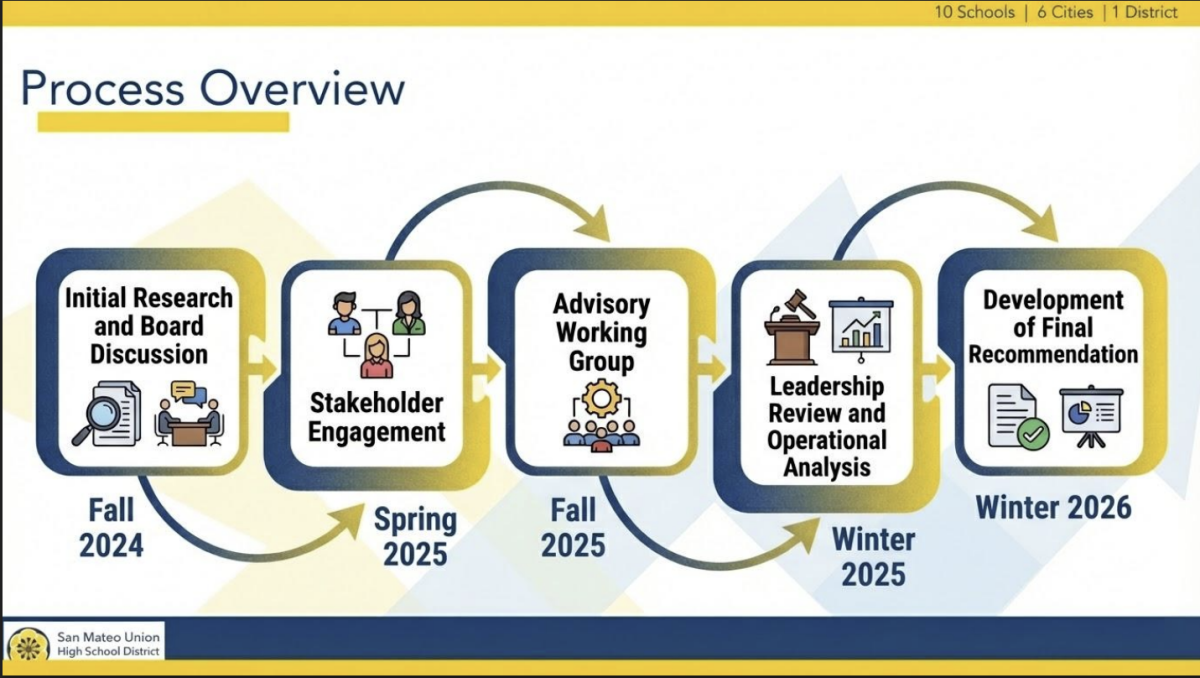

Next year, the district is looking at a new policy that creates a phone-free environment for students during school hours. In the most recent law passed by the state of California, Governor Gavin Newsom signed a bill that prohibits the use of phones in all California public schools. The Mills board has finalized its proposal to present to the SMUHSD board.
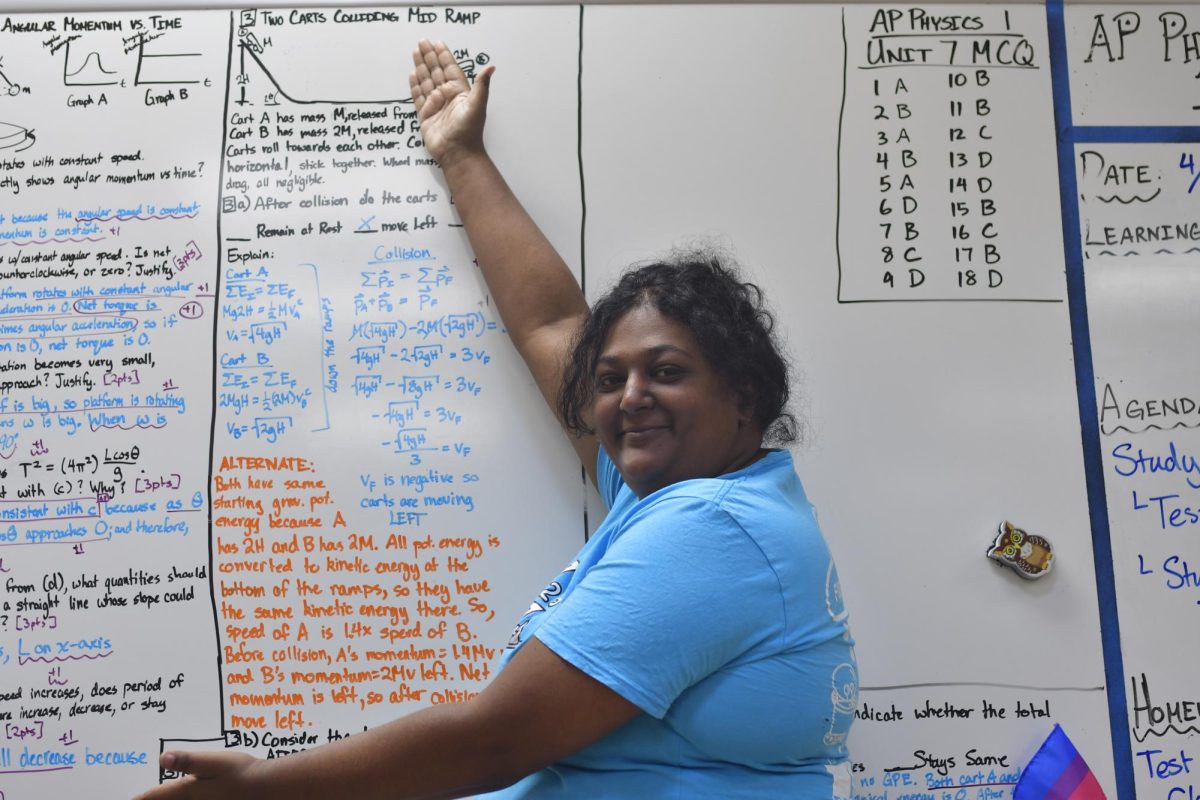
Mills science teacher Alexis Castaneda (the teacher representative for the Mills board) provided an overview of what the new policy could look like: “The proposal is that there is some place where students are allowed to keep their phones so they still have the phone on them, but without having direct access to them.” Alexis explains that the goal of this new policy will be to “get students more engaged and social with one another during breaks.”
Some students see this policy as beneficial. Melanie Herrera (9) explains, “I think this policy will affect the Mills community positively because it will get kids more focused on their schoolwork.” She explains that some students would be more productive during class, as many can get distracted by their phones.
Another positive reason is that students can converse with one another more. Evan Kang (11) shares, “I think it’s a good thing for students to interact with each other face to face, just without their phones.” Many students get distracted by their phones, which can cause a halt to their conversations. With the new phone policy, students will be able to have a full conversation without the worry of someone getting preoccupied with their phone.
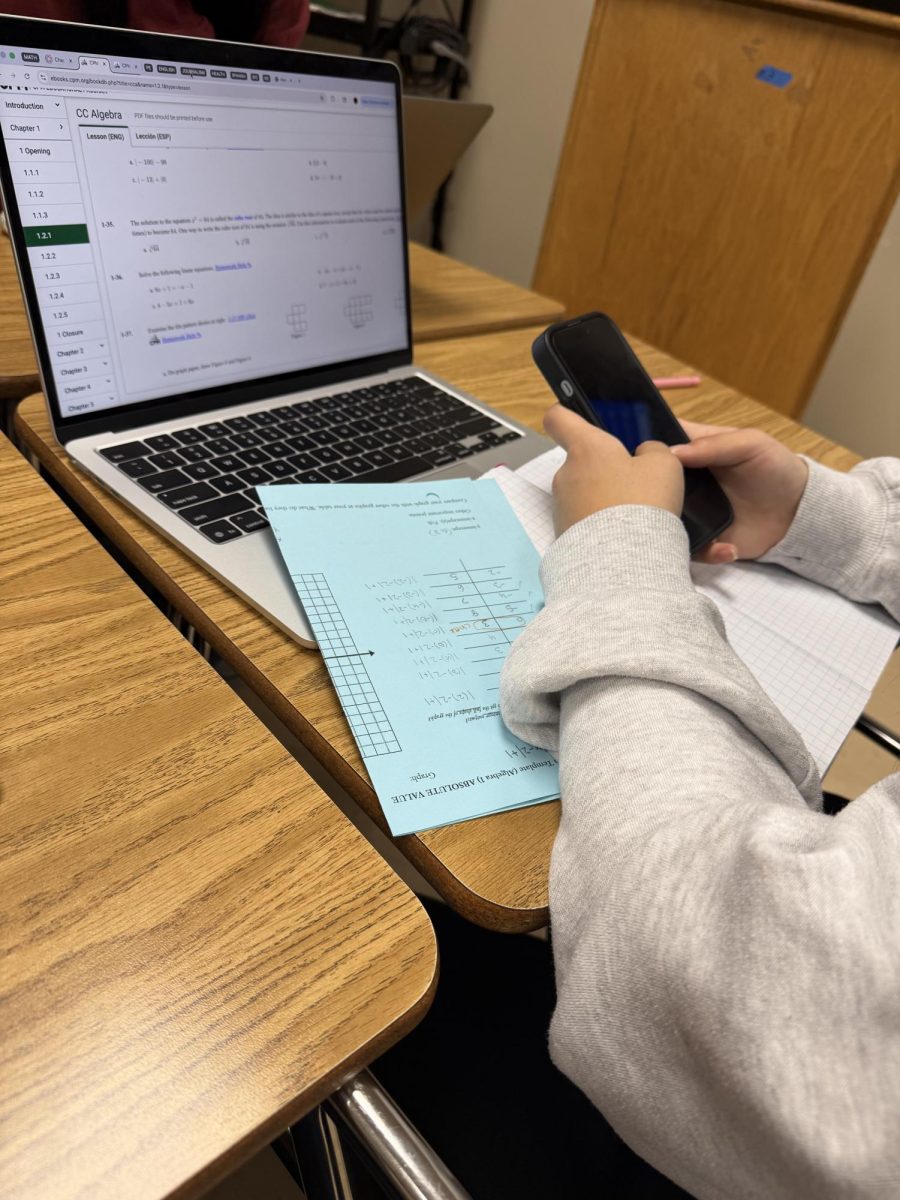
However, as the policy approaches, many students also have worries and concerns. Without access to their phones in between classes, students will have difficulty communicating about where to meet up with their friends during brunch or lunch. Although phones can be a distraction to many, they can also be a stress reliever during breaks to wind down and relax.
Logan Wu (9) has bigger concerns, one of which is, “If there is an emergency and you are trying to contact your parents, students won’t be able to access [their phones].” When asking Alexis about addressing students’ concerns about emergencies during school hours and how these situations will be handled, they say, “If the school has an [emergency] in place, [they can] immediately notify all families that something is going on.” In the future, the school is trying to figure out a system that can alert all parents and guardians in case of an emergency.
Every school in the district has to come up with a policy that must comply with the new law. Although many schools are still coming up with a rule, some schools have already implemented this law. Throughout the last few years, San Mateo High School (SMHS) has had Yondr pouches where students close the pouches with a pin, automatically locking it. Pouches can only be unlocked with magnets that teachers have access to. Similar to SMHS, Capuchino High School recently implemented Yondr pouches this year. First-period teachers make sure students’ phones get locked up, and the last-period teachers unlock their phones before dismissal.
Alexis says, “If students need to call family or take pictures for an assignment, they just go up to the teacher, and they unlock the phone.” One system they are considering are Yondr pouches. Students can get access to their phones when they need to. Otherwise, their phones get locked up in the pouches until the end of the day.
Even though it is just a proposition, this new adjustment to the Mills community will make a big difference. Alexis finishes with, “The school should make sure students aren’t distracted by their phones, but can still contact families in emergencies.”