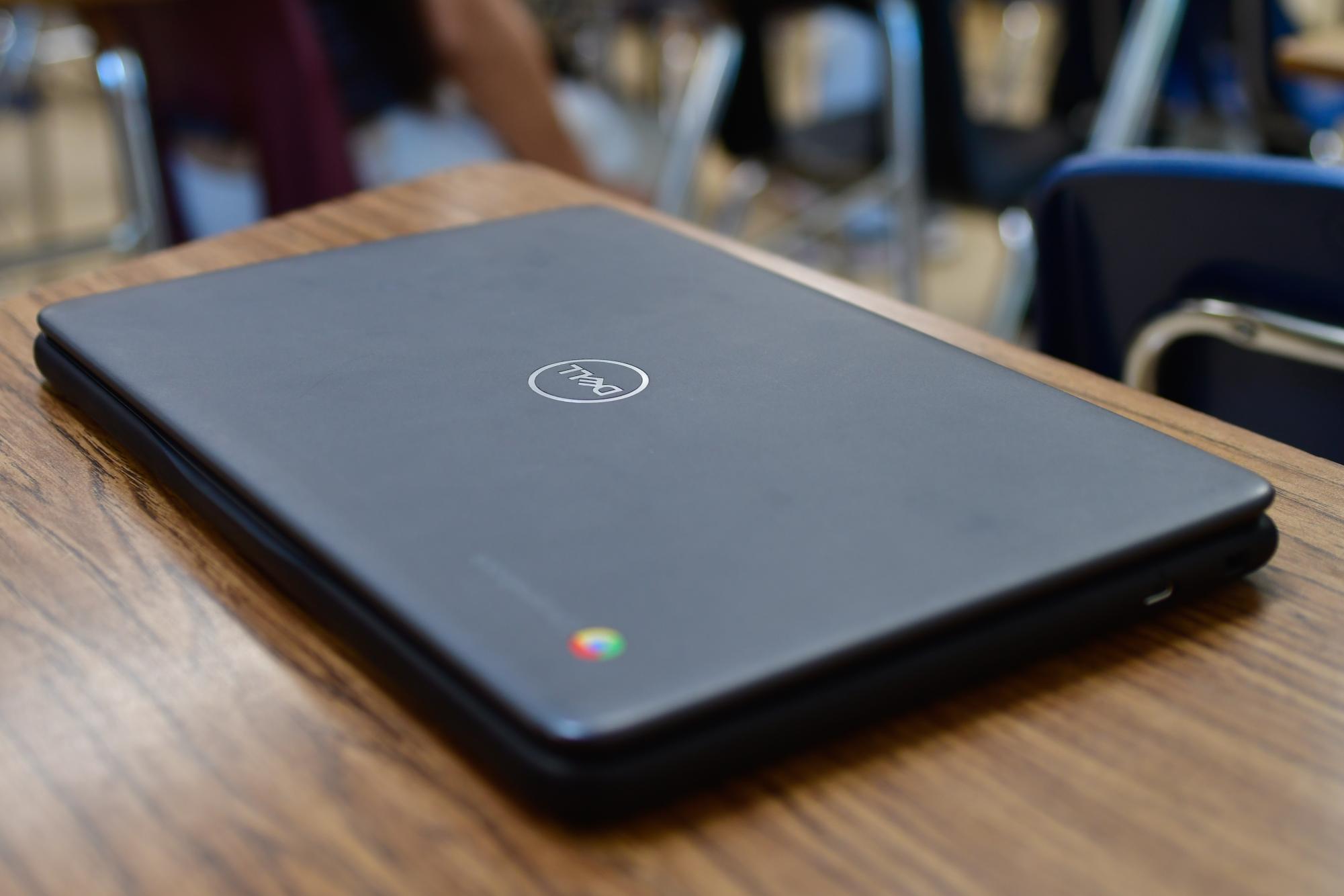

Starting after spring break, Mills High School will implement a new technology pilot program requiring all digital school work to be done on school issued Chromebooks during instructional time. This is part of the school’s campaign to control student technology usage at school, along with new phone policies. During this Mills specific pilot program, students will still be allowed to use personal computers (laptops and tablets) during brunch, lunch and FLEX. The new policy was quietly announced through a ParentSquare message, bundled with a reminder to bring Chromebooks for CAASP testing. According to the post, the policy is part of an initiative by the school administration to promote, “[the school’s] commitment to equity, student safety, and strong instructional practices.” The move has sparked some controversy, especially from students, with its timing in the middle of the year leading to some confusion.
Mills’ original computer policy in the student handbook, stated all students needed a device. School-issued Chromebooks were given to all students, with the option to use a personal computer if a student chose to.
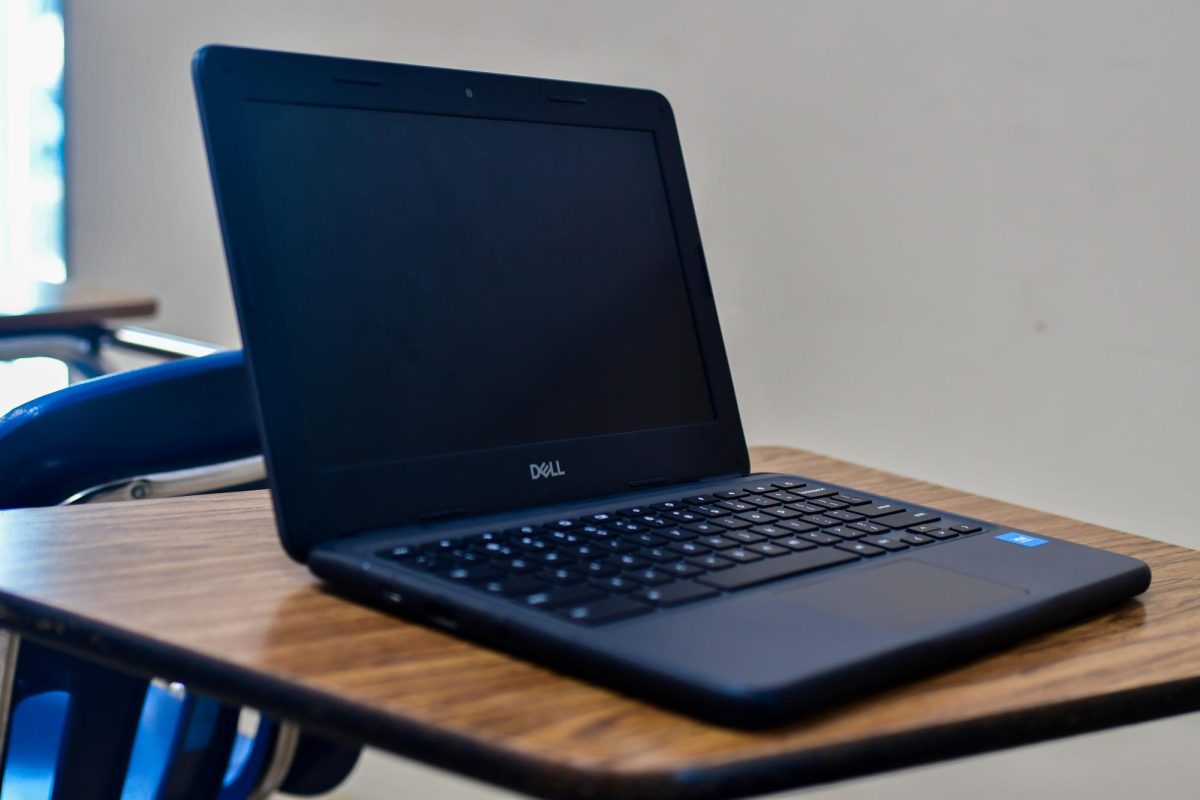
The Mills administration had some concerns about the previous policy. Mills principal Pamela Duszynski said, “We are noticing that when students are on personal devices, they may have access to different software extensions or outside resources that are not universally available to all students in the classroom, and that can create some inequities in the classroom learning itself.” Duszynski also shared that certain features that some teachers use are only available on Chromebooks, saying, “Some features on Canvas are only accessible on school Chromebooks … A teacher literally gave an example of having to pass around a Chromebook to [the] group to complete the activity [which required the school Chromebook]”.
This new program has not been received well with many students, especially those who use a personal computer. Austin Academia (11), who currently uses an Apple Macbook, said of the policy, “I think it is completely unnecessary, because I believe that students are disciplined enough to stay on task, especially when they have a personal computer.” Many saw their personal computer as an investment in their education, which now is now wasted. “Students spend money on MacBooks just for schools to ban them,” he added.
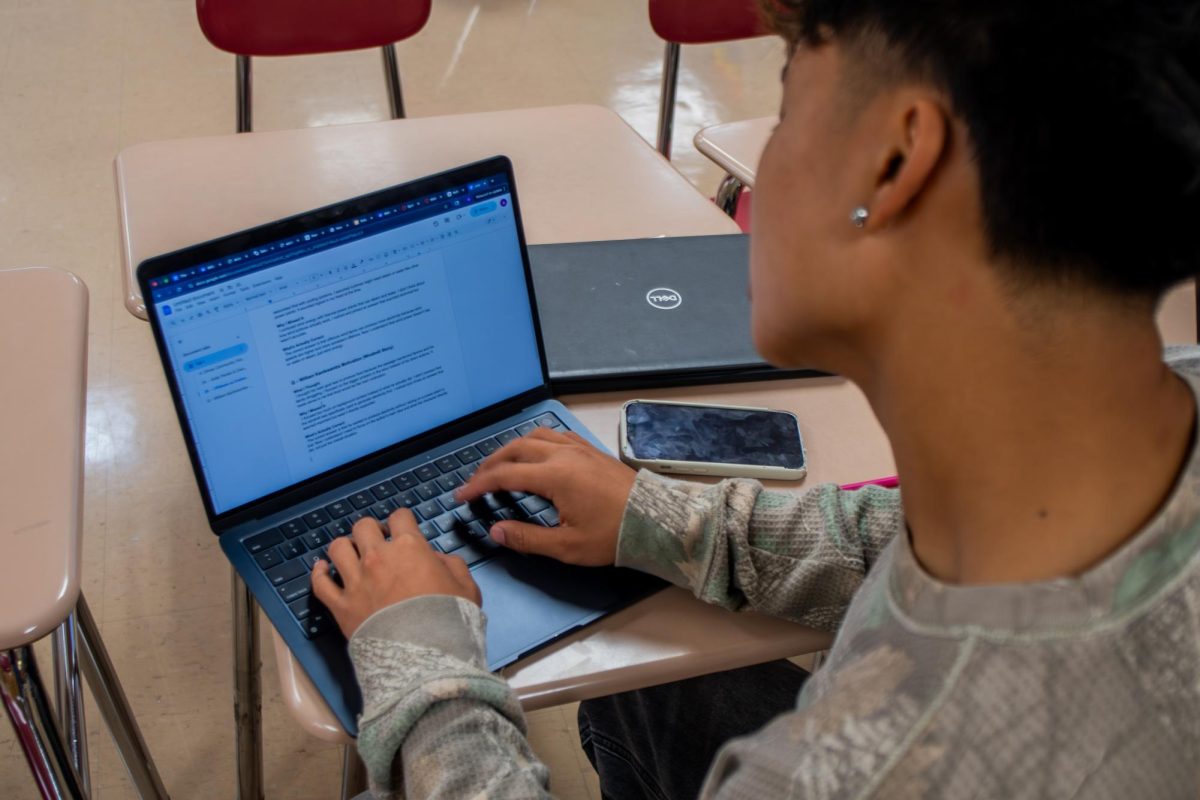
One of the most clear reasons a change like this may have been made was the increasing prevalence of generative Artificial Intelligence (AI). Many students have used it as a way to quickly do school assignments while putting in little to no effort. While debate still swirls about when – or if – AI is acceptable in school, some teachers decided to create their own policies to limit its usage. Biology and AP Environmental Science Teacher Mike DeBois mentioned, “I already required Chromebooks for the days where AI would be an issue.” Other teachers have had other solutions with Duszynski recalling, “Some teachers have actually just moved away from using computers at all in the classroom, and going back to paperwork for writing essays and on demand writing and so forth.”
Duszynski did not explicitly say that the change was in order to prevent AI usage in classes, rather noting, “We really don’t know how many students are using AI on their personal computers during instructional time. But we might learn more about that through this.” She said some selected AI sites may be available on the Chromebooks, helping them form future policy on the technology using the data gathered from this pilot period.
A stated reason for this test program was to make Bark for Schools available for all students. Bark for Schools is a program which scans a variety of software, including Google Drive and Gmail, among other programs. According to the company, they do this in order to find “potential safety concerns like online predators, adult content, bullying, drug use, depression, suicidal thoughts, and more.” Duszynski echoed this reasoning, explaining, “It would give us information, alerting us to a safety issue almost immediately and when personal devices are used, we don’t necessarily get those alerts.”
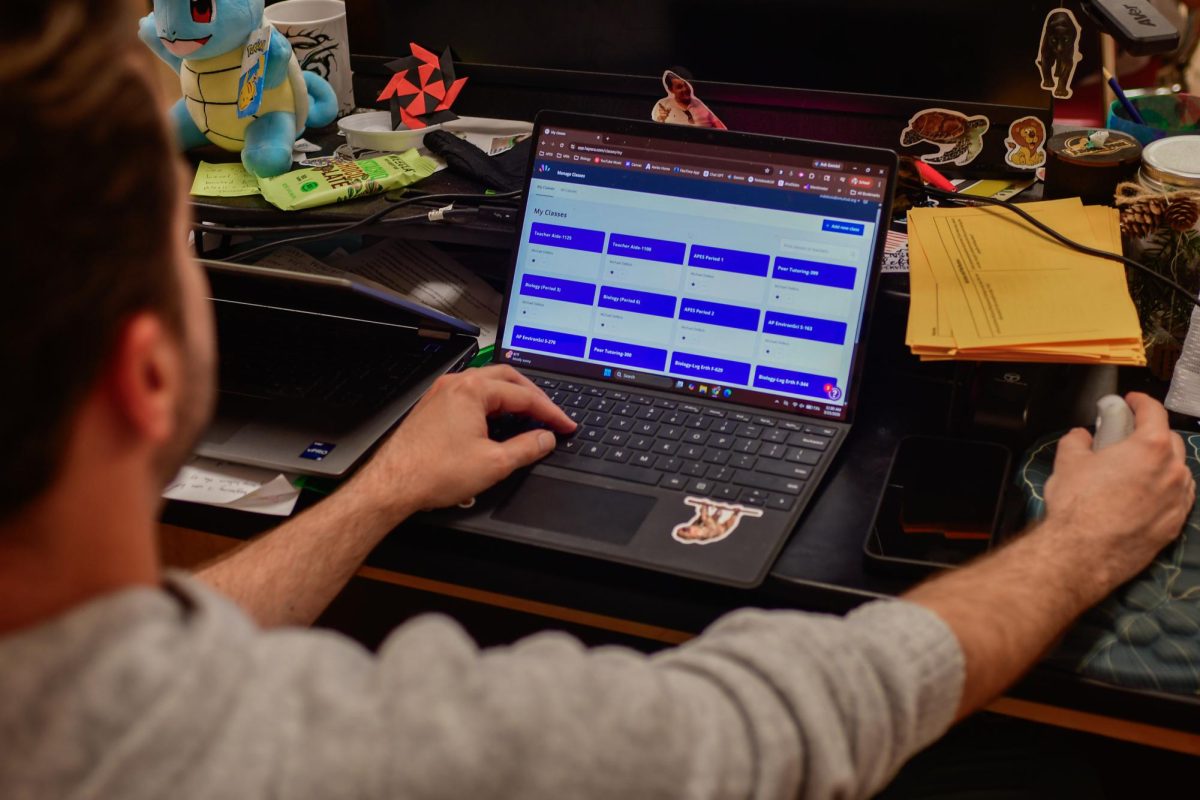
Another additional potential benefit of this new policy is that it may reduce students’ ability to get off task during class, such as playing games. “Students may understand that using Chromebooks during instructional time will maybe improve teacher efficacy,” Duszynski said. Due to the fact that teachers can use Hapara on the Chromebooks which allows them to view students’ screens, search history, and open programs, along with the Chromebooks already containing site restrictions, it may have some success towards this goal.
An important thing to be aware of is that this is only a pilot program, which means it is being used as an experiment for a possible future policy. “We want to figure out what works with it, and you know what things we might adjust if we continue this policy in the fall,” Duszynski stated. It is likely that the policy will change going into next school year if it continues.
A major concern for many students is that the school Chromebook’s performance is often viewed as underwhelming, even when performing regular school tasks like typing and internet browsing. While there are several variations of Chromebooks being used at Mills, the processing speed has been a constant gripe among students. Zhouhui Li (11) aired his distaste for the Chromebooks, saying, “There’s a lot of problems with using Chrome[books] because, first of all, it’s really slow.”
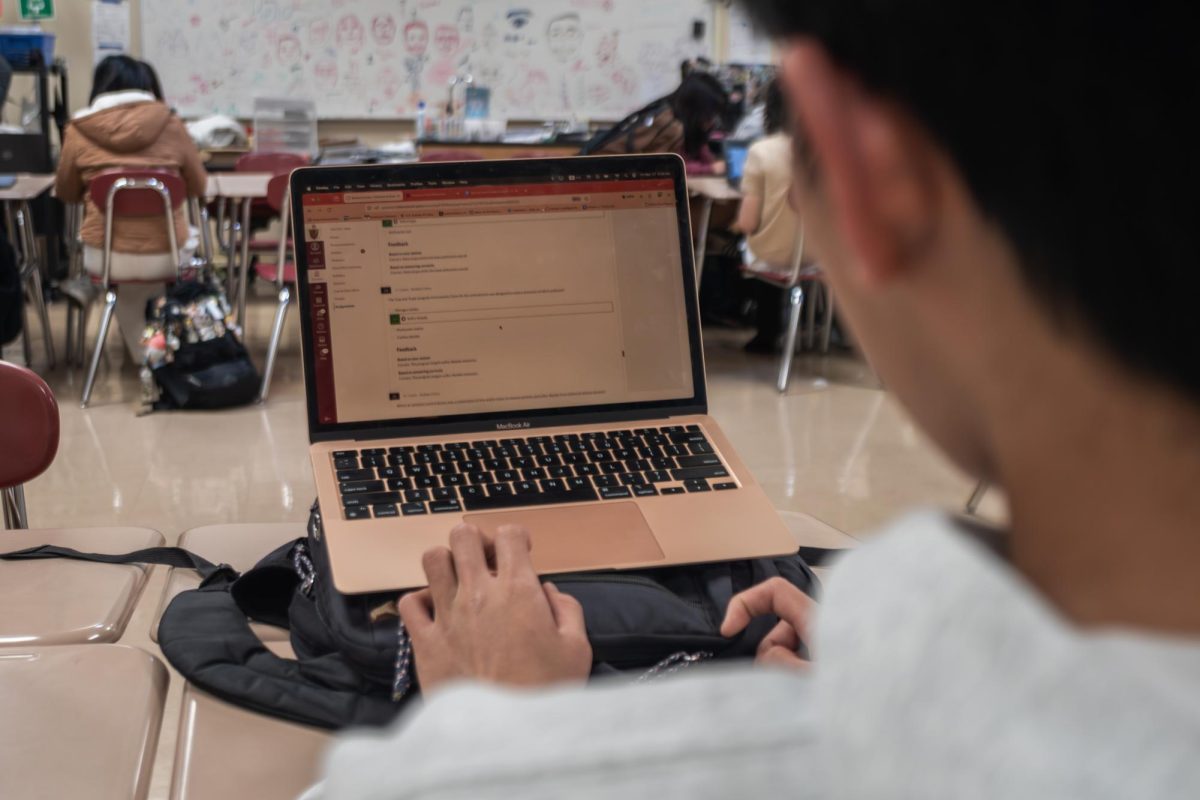
Duszynski says school administration will use this pilot as a way to evaluate the Chromebooks themselves. “If our Chromebooks are not functioning at a level that we need them for classroom instruction during the school day, then we need to learn about that and understand that.” Whether that means a possible computer upgrade in the future, or something else will likely be determined during this period.
The school Wi-Fi is often flaky during class, often causing disruptions in learning. Academia mentioned this, explaining, “Some students aren’t capable of learning because the internet always goes out, and with Macbooks, you could connect to [a] hotspot and the internet [is] just better when you’re using a MacBook.” On the other hand, the school chromebooks are locked in one network, which often experiences disruptions.
Duszynski had an alternate way of looking at it, saying, “When personal devices are online in the school, it actually hampers our school Wi-Fi. It makes it more difficult to be able to access school Wi-Fi for instruction. So we want to see during this pilot too, if our overall school Wi-Fi improves.” The school will be keeping a close eye on how the technology infrastructure around the school will handle this new policy, which will likely inform any future decisions.
While the school administration has cited many reasons why this change in policy is being made. Whether it be AI, distractions that stem from personal computers, or student equity, it is likely some form of a restriction on personal computers will be implemented after this school year. These reasons are likely not enough to make students any less angry about the change.
Duszynski clearly stated what she believed was the true purpose of the policy. “We want engagement back with our students in a meaningful and profound way that furthers teaching and learning for all of our students.”