
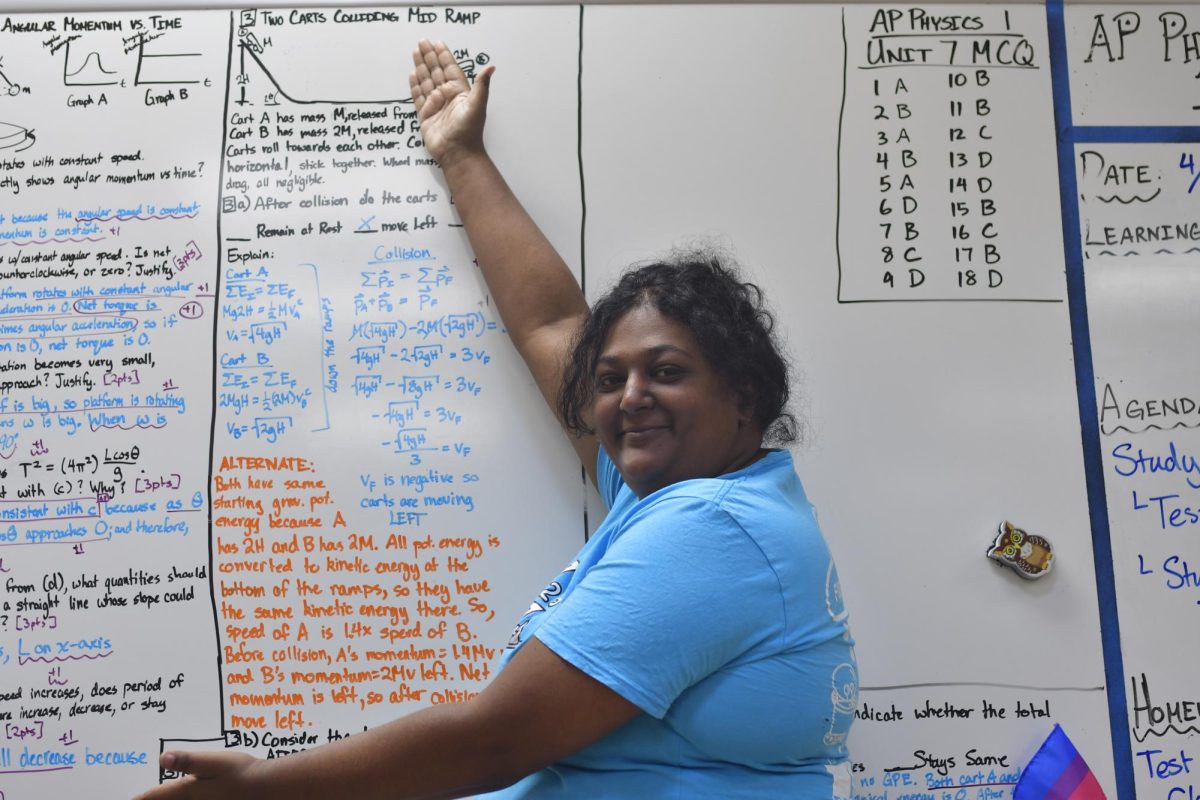

























If you attend Mills High School, you likely feel the academic pressure of taking as many APs as possible to get a high GPA and a good transcript. However, no one stops to think that if everyone is taking the same hard classes, how will you stand out in college applications? In the long run, how does loading on coursework benefit not just your transcript but your well-being? Every student is different, so every experience is going to be different. But generally, are APs and extra courses actually beneficial?
High school has a timeline of four years to present the best version of yourself that you can. That means that you have to get good grades, have the ability to multitask, and show your interests and skills outside of school as well, but there can never seem to be a solid way to get ahead. Sometimes, students think that taking a lot of classes could boost their GPA, and it makes them stand out as a better candidate for college, but this is not always the case. Students who are not prepared and taking classes just to stand out in college will most likely burn out. Mischa Balce (9) says, “Just because you take many classes doesn’t mean that you’ll get an A in all of them.” A lot of quantity doesn’t always mean it’ll be of good quality.
Oftentimes, people who try to aim for good colleges tend to think that taking many classes would help them stand out in college applications. In our experiences, you should only take classes if you are ready to take on the workload. The priority overall is to make sure you are diligent in order to keep your grades up. Biting off more than you can chew will not benefit you; it’ll only slow you down and create a decline in your overall academic performance. If you’re only doing it for status and you can’t handle the amount of workload, it’s likely you won’t do well, and you’ll be left without anything to show to colleges except bad grades.
Although many people say that taking many classes is beneficial for college applications, some may argue that taking many classes is only for status and competitive purposes, and not actually beneficial academically. Lorenzo Hockaday, Mills’ college and career coordinator, observes students by saying, “What I’m noticing here at Mills is that a lot of students are very competitive. So to be at the top of your class, a lot of seniors compete for that, and I think that’s one reason why they’re taking a lot of classes.”
Megan Lo (12) explains, “It’s known to take a lot of classes, like people often put that pressure on themselves because if you don’t take it, you’re gonna get judged by others.” Students at Mills are constantly in competition.
According to junior Sergio Monroy, he says, “Actually, a lot of people just do it because they want to, but other ones do it because they want to do it with their friends.” So, in terms of why students take APs, answers vary. Many students take it to prepare for future careers, or just for their own personal interest. But then again, you shouldn’t do something just because everyone else is, unless you’re fully prepared for the coursework and the responsibility that comes with taking an advanced course.
Monroy spoke about whether extracurriculars or APs were beneficial by saying, “Both is better.” He also emphasized the importance of doing it for yourself and your education. Extracurriculars and APs show skill-building and academic rigour. He also added, “More than three APs is way too much.” If you want to stand out to colleges and benefit yourself, balance academics with extracurriculars. When picking your classes, oftentimes less is more: less stress, fewer classes, fewer expectations for more fun, and more time to do stuff you might actually enjoy. Remember, there might still be time to change your schedule if this impacted you at all. Don’t hesitate to make choices for yourself; this is your life!